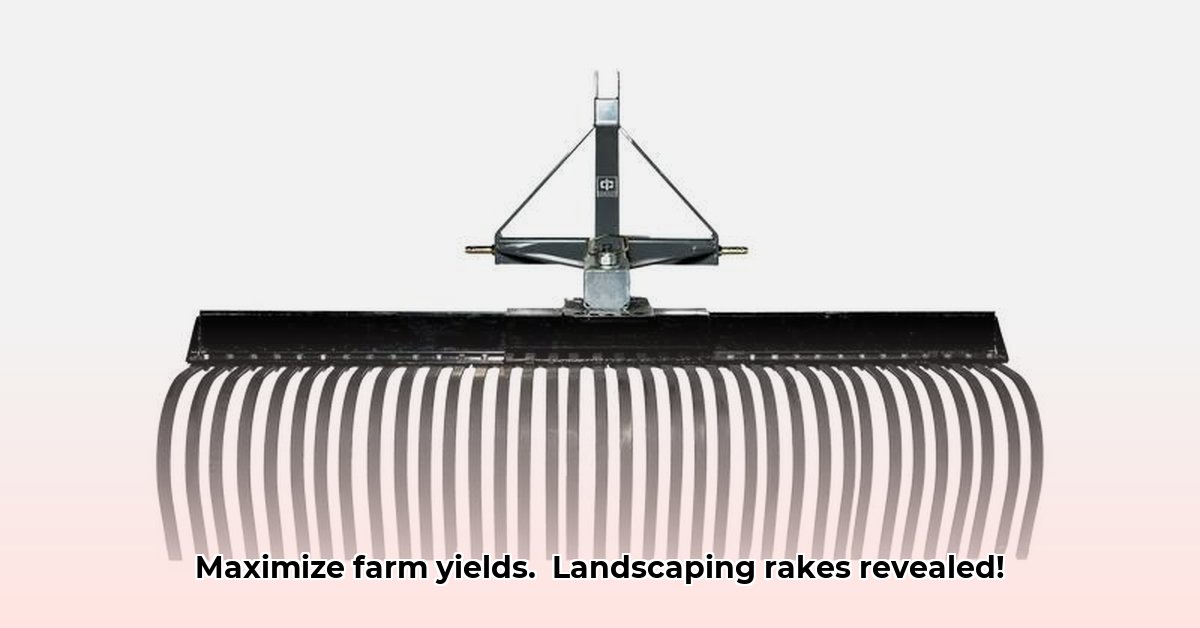
Choosing the Right Landscaping Rake
Selecting the right landscape rake is crucial for efficient and sustainable farming. The wrong choice can lead to wasted time, damaged equipment, and even soil compaction. Tractor Supply offers a range of options, each suited to different needs and soil types. This section will guide you in choosing the perfect tool for your operation. For more information on tractor supplies, check out Tractor Supply resources.
What's the most important factor influencing your rake selection? The answer is surprisingly simple: Your soil type and the tasks you need the rake to perform. Heavy clay soils require a different approach than light sandy loam.
First, consider your tractor's horsepower – this dictates the weight of rake you can safely and effectively manage. Overloading your tractor can lead to decreased efficiency and potential damage. Second, consider the materials. Durable steel rakes are ideal for heavy-duty tasks and long-term use, while lighter alloys minimize soil compaction in more delicate settings. Finally, think about tine spacing: wide spacing is perfect for moving large debris, while closely spaced tines are better for seedbed preparation. Remember to always verify compatibility with your tractor's three-point hitch.
Here's a breakdown of key considerations:
| Feature | Considerations |
|---|---|
| Rake Type | Heavy-duty for tough jobs, light-duty for sensitive soil, spring-tine for finer work. |
| Material | Steel for durability, lighter alloys for minimizing soil compaction. Recycled steel is a sustainable option. |
| Tine Spacing | Wider spacing for large debris; closer spacing for fine work like seedbed prep. |
| Working Width | Choose a width that matches your tractor's power and the size of your fields. |
| Tractor Compatibility | Essential! Check your tractor and rake manuals carefully. |
Setting Up and Operating Your Landscaping Rake
Attaching your rake is typically straightforward, but always refer to your tractor and rake manuals for precise instructions. A general process involves connecting the rake's hitch to the tractor's three-point hitch system.
- Secure the Hitch: Carefully connect the rake's hitch to your tractor's three-point hitch, ensuring a firm and secure connection.
- Adjust the Angle and Depth: Use the control levers (usually located on the tractor's hydraulic controls) to set the rake's angle and penetration depth. Start with a shallow depth and adjust as needed.
- Test Run: Begin slowly to feel the rake's response before increasing speed.
- Overlapping Passes: Overlap passes slightly for even coverage and to avoid missed areas.
- Consistent Speed: Maintain a consistent speed for optimal performance. Erratic movements can damage the rake and the soil.
- Slope Safety: Exercise extreme caution on slopes; they increase the risk of accidents.
- Safety Gear: Always wear appropriate safety gear, including gloves, sturdy footwear, and eye protection. This is non-negotiable for your safety.
Landscaping Rakes and Sustainable Agriculture
Beyond mere tidiness, landscape rakes are valuable tools for sustainable farming. They help reduce reliance on harsh chemicals while increasing efficiency.
- Seedbed Preparation: Efficiently levels the ground and removes debris, creating an ideal environment for seed germination. Did you know that properly prepared seedbeds can increase germination rates by up to 20%?
- Residue Management: Handles leftover plant material, improving soil health, reducing waste, and enhancing nutrient cycling. This helps reduce the need for synthetic fertilizers.
- Soil Amendment Application: Ensures even distribution of compost or other organic amendments, boosting soil fertility. "Effective soil amendment application maximizes nutrient uptake and reduces environmental impact," says Dr. Emily Carter, Soil Scientist at the University of California, Davis.
Maintaining Your Rake for Long-Term Use
Regular maintenance is key to extending your rake's lifespan and minimizing environmental impact through extended use.
- Regular Inspection: Inspect the rake after each use for any signs of damage or wear.
- Lubrication: Lubricate moving parts to prevent rust and friction.
- Cleaning: Clean off mud, debris, and plant material after every use. This prevents build-up and corrosion.
- Repair and Replacement: Repair damaged parts rather than replacing the entire rake whenever possible. Source replacement parts from reputable suppliers.
Addressing Potential Issues: Soil Compaction
Heavy rakes can cause soil compaction, impacting water infiltration and root growth.
- Prevention: Use lighter rakes, especially on sensitive soils. Consider conservation tillage techniques to minimize soil disturbance.
- Mitigation: Avoid excessive passes over the same area. Implementing cover cropping can help improve soil structure and reduce compaction's effects.
- Equipment Failure: Address any equipment failures promptly to prevent further damage. Regular maintenance is your best defense against unexpected breakdowns.
Conclusion: Investing in Sustainable Farming Practices
Landscaping rakes represent a valuable investment in both efficiency and sustainable farming. By carefully selecting, operating, and maintaining your rake, you can significantly improve your farm's productivity while minimizing your environmental footprint. Contact your local agricultural equipment supplier today to explore options and learn about potential subsidies to support your sustainable practices. Remember, every small step contributes to a larger, more sustainable agricultural future!